
by Massimo Usai
The long research of a better life.
Urban Mood Magazine — Wellness & Longevity
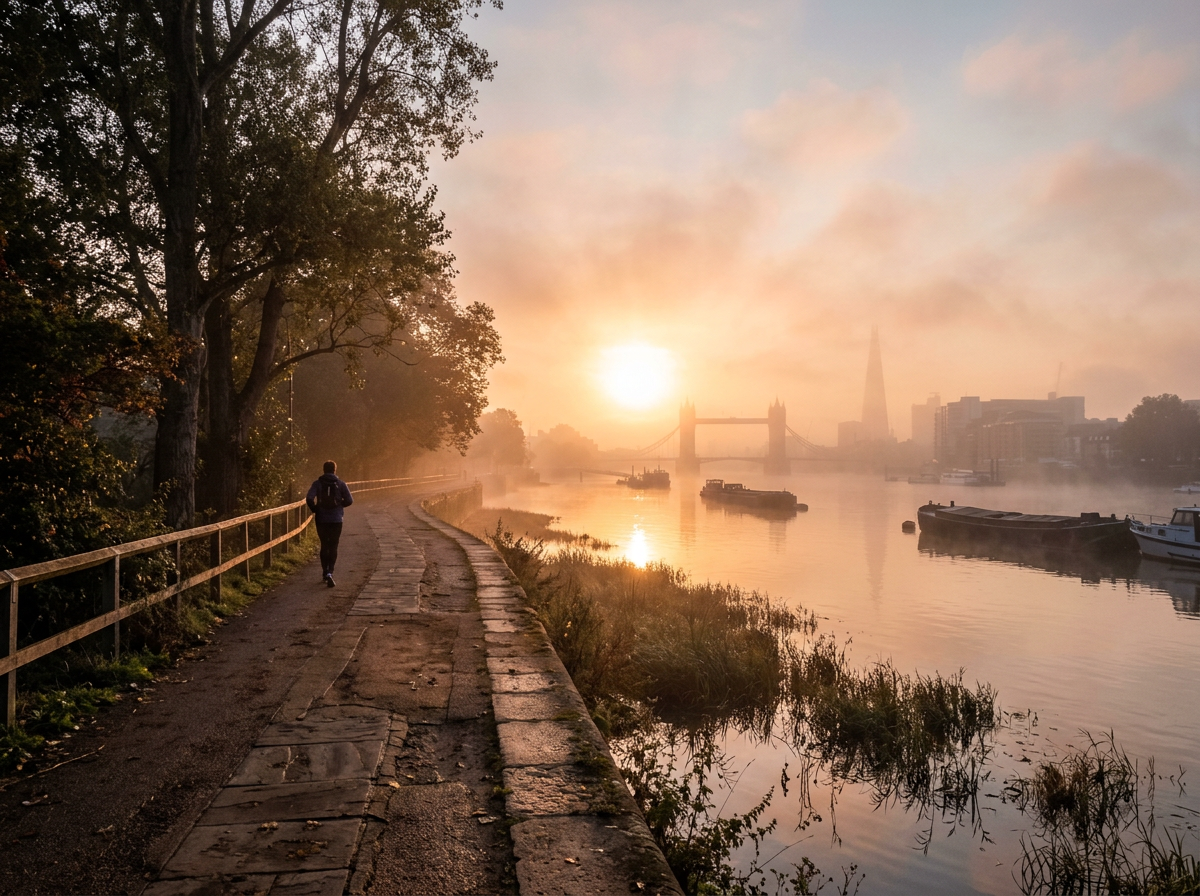
There is a stretch of the Thames Path between Putney Bridge and Barnes that I used to walk in the early hours, before London fully woke. The river was grey and still, the only sounds the low hum of a passing barge and the occasional fox cutting through the reeds. I did not think of those walks as health practice. I thought of them as breathing. But looking back, I understand that they were probably the most important thing I did for myself during those years — more than any gym session, any supplement, any well-intentioned resolution made on a January evening. I was creating a better life for today.
That is the central paradox of wellbeing: the things that sustain us most are rarely dramatic. They are small, quiet, almost invisible — and precisely because of that, we underestimate them.
Why the morning is the whole day in miniature
The science of longevity, which I have spent the last years following through my job, interviews and conversation with specialists like Roberto Pili of the World Longevity Community, keeps arriving at the same uncomfortable conclusion: lifestyle habits are not accessories to health. They are health. And the most consequential habits tend to cluster in the first hour of the day.
This is not mysticism. It is chronobiology. The body’s hormonal cascade, its cortisol curve, its readiness to repair and adapt — all of these are shaped by what happens in the moments after we open our eyes. A morning spent scrolling in bed trains the nervous system in reactivity. A morning spent moving gently, drinking water, breathing deliberately, trains it in something closer to resilience.
The Blue Zone populations that researchers study — Sardinia, Okinawa, Loma Linda, Nicoya — do not share a single diet or a single exercise regimen. What they share, almost universally, is a sense of intentional rhythm. They begin the day with purpose. Even if that purpose is simply stepping outside to tend a garden or greet a neighbour.
The architecture of a morning that works
I want to be careful here not to turn this into another listicle of productivity hacks. What I am describing is something more organic than that — a structure that serves the person, not the other way around. That said, there are a handful of practices that research consistently supports:
- Hydration before anything else. The body loses roughly half a litre of water during sleep through respiration and perspiration. A glass of water before coffee is not a trend — it is physiology.
- Gentle movement before stimulation. A short stretch, a slow walk, a few minutes of yoga. The goal is to wake the body before waking the mind to the day’s demands.
- Natural light exposure within the first thirty minutes. Light is the primary regulator of the circadian clock. Even on an overcast morning in London — and there are many — stepping outside for a few minutes is measurably effective.
- A window of quiet. Not necessarily formal meditation, though that helps. Simply a few minutes without screens, without news, without the ambient noise of other people’s urgency.
None of these requires money. None requires a particular lifestyle. They require only the willingness to treat the morning as something worth having, rather than something to survive.
What we eat and why it matters more than we admit
The relationship between food and mood is no longer a matter of alternative wellness culture — it is mainstream neuroscience. The gut produces roughly ninety percent of the body’s serotonin. What we feed it directly influences how we feel, how we sleep, how we handle stress.
The foods that consistently appear in longevity research — oily fish, leafy greens, legumes, nuts, olive oil, whole grains, fresh fruit — are not exotic. Many of them are the staples of a Mediterranean or Atlantic kitchen, affordable and widely available. The shift is not about eating perfectly. It is about eating with some awareness of what food does beyond satisfying hunger.
Hydration deserves a separate mention because it is the most underestimated factor in daily cognitive and emotional function. Even mild dehydration — the kind that carries no obvious thirst signal — impairs concentration, increases irritability, reduces the capacity to regulate emotion. Two litres of water a day is not a prescription. It is a floor.
The body does not distinguish between lifestyle and identity. How we move, eat, and rest is not what we do — it is who we are becoming.

Movement as language, not medicine
I am wary of the word ‘exercise’ because it carries too much baggage — the implication of effort, obligation, a debt to be paid. What I prefer to think about is movement as a natural language of the body, one it needs to speak daily to remain fluent.
It does not matter much what form it takes. Walking is enough. Cycling is enough. Swimming, dancing, gardening — all of it counts, all of it feeds the same upstream processes: endorphin release, mitochondrial efficiency, inflammatory regulation, sleep quality. The body does not care about aesthetics. It cares about being used.
The ten thousand steps benchmark is useful not as a target to obsess over but as a reminder that movement needs to be woven into the day, not bolted onto its end. A walk at lunch. Stairs instead of lifts. An evening stroll with no destination in mind. The accumulation of small movements across a day is, physiologically, more valuable than a single intense session followed by eight hours of sitting.
Starting small, staying honest
The most common failure mode in wellness is ambition. We decide to change everything at once, sustain it for ten days, and then interpret the inevitable collapse as evidence that we are not the kind of person who can do this. We are. We just chose the wrong entry point.
The right entry point is embarrassingly small. One glass of water in the morning. Five minutes outside. A slightly earlier bedtime. These are not compromises — they are seeds. And seeds, given time and consistency, do exactly what they are supposed to do.
——
Massimo Usai is a photographer, a Social Media Manager and editorial director of Urban Mood Magazine. He writes on culture, wellbeing and the quieter patterns of a life lived with intention. And he support Arsenal all his life.

Manuale Creativo per Fotografi Ribelli
40 idee per riscattare il tuo sguardo fotografico. Un libro di Massimo Usai per chi vuole guardare il mondo con occhi nuovi.
Acquista su Amazon In qualità di Affiliato Amazon ricevo un guadagno dagli acquisti idonei.Scopri di più da
Abbonati per ricevere gli ultimi articoli inviati alla tua e-mail.


