Fotografo | Storyteller | Direttore di Urban Mood Magazine 📍 Cagliari, Italia
Chi sono
Sono un fotografo e storyteller con un’anima cosmopolita. Nato a Cagliari, la mia passione per la fotografia e la scrittura mi ha portato a Londra, dove ho vissuto per oltre 20 anni, affinando il mio occhio artistico e collaborando con diverse riviste internazionali come giornalista freelance. Le mie esperienze a Bruxelles e Varsavia hanno arricchito ulteriormente la mia visione del mondo, aggiungendo una prospettiva multiculturale alla mia narrazione visiva e scritta.
Oggi, come Direttore di Urban Mood Magazine, guido una redazione con l’obiettivo di raccontare il mondo attraverso immagini e parole, con uno sguardo attento ai dettagli, all’estetica e alla profondità delle storie.
Il mio lavoro
Le mie immagini sono più di semplici scatti: sono narrazioni visive che catturano l’essenza dei momenti, dalle dinamiche urbane ai frammenti di vita quotidiana. Con uno stile che unisce reportage, arte e storytelling, ho collaborato con testate di prestigio internazionale, tra cui:
📰 New York Times | Time Out London | News Vancouver | Londonist Londra 📰 Latitudes Milano | Il Piccolo di Alessandria | Italia News Media
Molte delle mie fotografie sono disponibili su piattaforme globali come Getty Images, Alamy, Shutterstock, Adobe Stock e 500px, offrendo al pubblico un punto di vista unico e autentico.
Oltre la fotografia
Parallelamente alla mia attività editoriale e artistica, sono co-fondatore di ART PRIME STUDIO, un negozio online che gestisco in collaborazione con Anna Terlecka, produttrice media di Discovery Poland. Qui, oltre a opere artistiche selezionate, è possibile acquistare alcune delle mie stampe fotografiche più esclusive.
Nel tempo libero, seguo con passione l’Arsenal e mi immergo nella musica dei Radiohead, due elementi che, come la fotografia, fanno parte della mia identità.
📷 Scopri di più sul mio lavoro fotografico visitando il mio sito personale.
La Redazione
Benvenuti nella Redazione di “URBAN MOOD MAGAZINE”
La redazione di “URBAN MOOD MAGAZINE” è composta da una squadra diversificata di esperti e appassionati provenienti dalle principali capitali europee, ognuno con un ruolo distintivo nel portare ai lettori una panoramica completa su cultura, viaggi, sport e attualità. Scopriamo chi sono i nostri autori e collaboratori:
Alessio Sartori
Tema: Viaggi e Racconti
Residenza: Firenze, Italia
Mini Scheda: Alessio Sartori è un appassionato viaggiatore che condivide le sue esperienze attraverso racconti avvincenti e dettagliati. Da Firenze, città d’arte e cultura, Alessio esplora il mondo e racconta le sue avventure con un occhio attento ai dettagli e alle curiosità culturali.
Giulia Marini
Tema: Cultura e Orizzonti
Residenza: Torino, Italia
Mini Scheda: Giulia Marini si dedica alla scoperta delle diverse culture e orizzonti del mondo. Con base a Torino, città storica e cosmopolita, Giulia esplora temi culturali globali, offrendo prospettive uniche e approfondite sulle tradizioni e le evoluzioni culturali.
Matteo Ferri
Tema: Europa e Voci
Residenza: Bologna, Italia
Mini Scheda: Matteo Ferri è un esperto di tematiche europee, focalizzandosi sulle voci e le prospettive emergenti nel continente. Da Bologna, città universitaria e dinamica, Matteo esplora le questioni politiche, sociali e culturali che definiscono il panorama europeo contemporaneo.
Elena Lombardi
Tema: Attualità e Storie
Residenza: Napoli, Italia
Mini Scheda: Elena Lombardi è una giornalista appassionata di attualità e narratrice di storie che hanno un impatto sociale. Con sede a Napoli, città vivace e storica, Elena racconta le storie di persone e eventi che influenzano il nostro mondo moderno, portando alla luce temi importanti attraverso il suo lavoro giornalistico.
Luca Montanari
Ruolo: Esperto di Cultura e Innovazione
Residenza: Londra, Regno Unito
Mini Scheda: Luca Montanari è un esperto di cultura e innovazione con radici italiane e sede a Londra. Con una passione per l’arte, la tecnologia e l’innovazione, Luca esplora le tendenze culturali emergenti e le innovazioni che plasmano il panorama europeo e globale. Grazie alla sua esperienza biculturale, Luca offre una prospettiva unica che integra le influenze italiane con le dinamiche culturali londinesi. Scrive in due lingue: Inglese e Italiano.
Sophie Leclerc
Ruolo: Cultura e Attualità Europea
Residenza: Parigi, Francia
Mini Scheda: Sophie è una corrispondente di attualità e cultura europea con sede a Parigi. Con una prospettiva critica e informativa, Sophie analizza gli eventi politici, sociali ed economici che influenzano l’Europa contemporanea, fornendo insight preziosi ai lettori interessati agli sviluppi regionali e globali.
Hanna Simonis
Ruolo: Giornalista e Produttrice Televisiva
Residenza: Varsavia, Polonia
Mini Scheda: Hanna Simonis è una giornalista e produttrice televisiva che scrive da Varsavia. Specializzata in viaggi, food & drinks e lifestyle, Hanna racconta con passione le tendenze emergenti e le destinazioni più affascinanti. La sua esperienza nel mondo dei media le consente di offrire uno sguardo unico e coinvolgente sulle culture e i sapori del mondo. Scrive in tre lingue: Italiano, Polacco e Inglese.
Con questa squadra diversificata e competente, “URBAN MOOD MAGAZINE” si impegna a fornire ai lettori una visione ricca e variegata delle tematiche europee e globali che definiscono il nostro tempo.
Photographers have changed their role. They are now witnesses to life’s precious moments. Through their lens, they share emotions, tell stories, and create feelings. This makes the viewer feel like they are part of the story.
This new view has made photography more than just taking pictures. It’s about showing the depth of human experience.
The Evolution of Photography in Storytelling
Photography has seen big changes, from the early days to now. It has moved from the pictorialist movement to today’s digital stories. This change has not just updated how we take pictures but also how we tell stories through them.
From Pictorialism to Digital Narratives
Photography started with pictorialism, focusing on looks and painting-like effects. As tech improved, photography changed, leading to today’s digital age. Now, photographers can easily take, edit, and share their work, opening up new ways to tell stories.
The digital era has let photographers share deep stories and feelings. They often focus on everyday moments that might be missed. This has made photography more open to everyone, reaching more people.
The Role of Technology in Modern Photography
Technology has been key in modern photography. New camera tech, editing tools, and social media have changed how photographers work and share. For example, good smartphone cameras have made it easy for anyone to take professional photos, mixing amateur and pro work.
Technological Advancement
Impact on Photography
Digital Cameras
Increased flexibility in editing and sharing photographs
Smartphone Cameras
Made photography more accessible, enabling capture of everyday moments
Social Media Platforms
Provided new avenues for photographers to share their work and connect with audiences
The biggest impact of technology is in street photography. It has changed how we see and share life in public. Now, photographers can quickly share their views of city life, adding to a global story.
Why Photography Is a Form of Storytelling
Photographers use a camera to share emotions and experiences in a way words can’t. Photography is a language everyone can understand, no matter where they’re from. It can make us feel, remember, and connect with others.
Connecting Emotion and Experience
A photo can freeze a moment forever. This is key to photography as a visual narrative. It lets photographers share deep emotions and experiences, making us feel like we’re part of the story.
For example, a calm landscape photo can bring peace. A busy city photo shows the city’s energy. The bond between us and a photo is personal, shaped by our feelings and experiences.
Capturing Moments That Matter
Photography captures important moments for us, our communities, and history. These can be personal, like a wedding, or big, like a protest. Photography helps keep these moments alive, letting us learn from the past.
Type of Moment
Significance
Emotional Impact
Personal Events (e.g., weddings)
Creates lasting memories
Evokes joy and happiness
Historical Events (e.g., protests)
Documents history
Can evoke empathy and understanding
Natural Disasters
Raises awareness
Often evokes sadness and concern
Photographers are key in showing us the world and our role in it. Through their lens, we see stories that inspire, teach, and connect us.
The Photographer’s Vision: More Than Just a Click
Photography is more than just pressing a button. It’s about the vision behind the shot. A photographer’s skill in telling a story through their lens makes their work unique.
The Importance of Perspective
Perspective is key in photography. It shapes how we see the image. By picking a special view, photographers add depth and feeling to their photos.
Street photography captures everyday moments from unique angles. It shows the beauty in the ordinary.
Perspective Type
Description
Effect on the Viewer
Low Angle
Shooting from below the subject
Makes the subject appear powerful
High Angle
Shooting from above the subject
Can make the subject seem vulnerable or small
Eye Level
Shooting at the same height as the subject
Creates a sense of equality and intimacy
Crafting a Narrative Through Composition
Composition is crucial in photography for storytelling. By arranging elements in the frame, photographers guide our attention. They share their message effectively.
Using the rule of thirds, leading lines, and framing makes images appealing and meaningful. These techniques help tell stories that captivate and inspire.
The rule of thirds divides the image into thirds both ways.
Leading lines guide the viewer’s eye to the subject.
Framing uses natural or man-made features to surround the subject.
By mastering these techniques, photographers can engage and inspire their audience through their stories.
Impact of Social Media on Photography as Storytelling
Photography and storytelling have merged on social media, turning everyday moments into engaging stories. This digital shift has changed how we view and share visual content. It has also altered how photographers create and share their work.
Social media’s impact on photography is vast, affecting both the art and its audience. It has given photographers new ways to showcase their skills and connect with fans and clients.
Platforms That Elevate Visual Narratives
Different social media sites offer unique chances for photographers to share their stories. Instagram, for example, is perfect for photographers to post stunning images and stories.
Instagram and similar sites are key for photographers to grow their audience and get noticed. Using hashtags helps them reach people interested in certain themes or styles.
Platform
Key Features
Benefits for Photographers
Instagram
Visual-centric, Stories, Hashtags
Wide reach, Community engagement
500px
High-quality image sharing, Portfolio building
Professional networking, Exposure to potential clients
The Rise of Influencer Photography
The growth of social media influencers has greatly influenced photography. Influencers team up with photographers to make content that looks great and grabs attention.
This partnership has brought new income chances for photographers. They can now work with brands and influencers to make top-notch content. It has also made photographers strive to be more creative and try new things.
The Power of Photojournalism
Photojournalists use cameras to share important stories. They often change how we see things and push for change. This form of photography as storytelling captures moments, telling complex stories in one picture.
Photojournalism shapes public opinion and changes how we think. Images can make us feel, teach us about big issues, and motivate us to act. Famous photojournalists have highlighted global problems, from war zones to environmental crises.
Shaping Public Opinion Through Images
Photojournalism’s effect on public opinion is huge. A strong image can shift how we feel and react to events. The street photography meaning here is about showing a community’s life, struggles, and victories.
Aspect
Impact
Example
Emotional Resonance
Evokes feelings, creating empathy
Images of natural disasters
Awareness
Raises awareness about social issues
Documenting social injustices
Influence
Influences public opinion and policy
War photography
Ethics in Documentary Photography
With great power comes great responsibility. Documentary photographers must be ethical, respecting their subjects. It’s a thin line between telling a story and crossing privacy lines.
As we see the world through photojournalists, we must value their art and ethics. This helps us understand their stories and their impact on our society.
Personal Narratives Through Family Photography
Family photography turns our visual narrative into a living story. It shows our heritage and everyday moments. It’s more than just taking pictures; it’s about keeping our family’s history alive.
Family photos are key to telling our stories. They capture our traditions, big moments, and small joys. These photos weave a rich tapestry of memories for future generations.
Documenting Heritage and Tradition
Family photography is great for keeping our cultural heritage alive. It records our traditions and special events. These photos are a treasure that lasts for years.
For example, photos can show off our traditional clothes and cultural festivals. They also capture the warmth of family reunions. These images connect us to our roots, helping future generations understand their heritage.
Aspect
Traditional Photography
Modern Family Photography
Medium
Primarily film
Digital cameras and smartphones
Accessibility
Limited by cost and accessibility of film
Highly accessible with smartphone technology
Sharing
Physical albums or framed prints
Instant sharing on social media and digital albums
Capturing Milestones: Birthdays, Weddings, and Beyond
Family photography is about more than just big events like weddings and birthdays. It’s also about the everyday moments that make life special. These photos become precious, reminding us of happy times and important milestones.
To capture these moments, you need a keen eye and understanding of the family. Professional photographers can turn these moments into lasting memories.
By focusing on family photography, we see its value in telling our personal stories. It helps us cherish our heritage and traditions.
Exploring Cultural Identity Through Photography
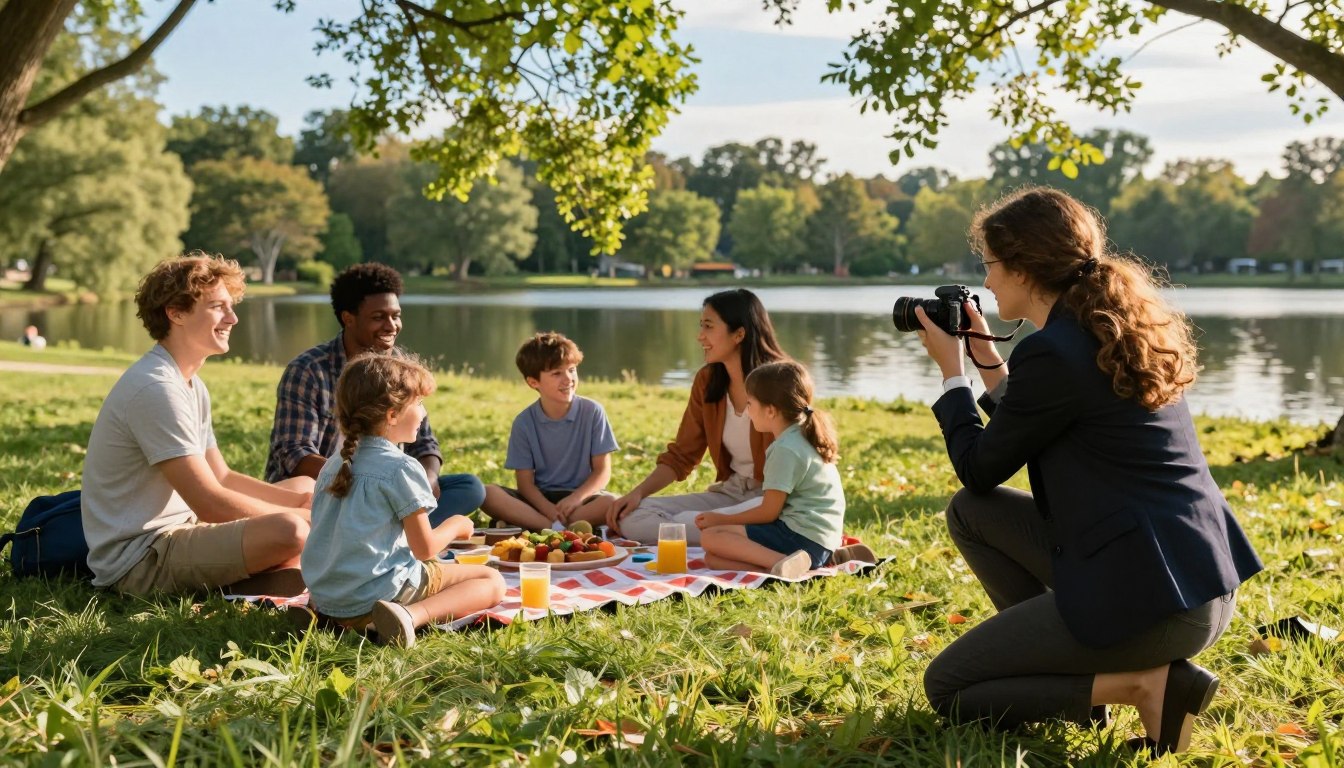
Cultural identity is a rich tapestry that photography can beautifully unravel. Through the lens of a camera, photographers can capture the essence of different cultures. They highlight their unique traditions, practices, and values.
Photography plays a crucial role in representing diverse voices and stories. It often gives a platform to communities that are underrepresented in mainstream media. By focusing on the nuances of cultural identity, photographers can promote understanding and appreciation among different communities.
Representing Diverse Voices
Photography has the power to represent diverse voices by capturing the authentic experiences of various cultural groups. It provides a medium for storytelling that transcends language barriers. This allows a broader audience to connect with the narratives being told.
Key aspects of representing diverse voices through photography include:
Capturing authentic moments that reflect the daily lives and traditions of different cultures.
Highlighting the work of photographers from diverse backgrounds to provide a multitude of perspectives.
Using photography to tell stories that might otherwise remain untold, bringing attention to social and cultural issues.
Using Photography to Celebrate Differences
Celebrating cultural differences is an essential aspect of promoting global understanding and peace. Photography can be used to highlight the unique aspects of various cultures. It showcases their beauty and significance.
Cultural Practice
Photographic Representation
Impact on Cultural Understanding
Traditional Festivals
Capturing vibrant colours and dynamic performances.
Promotes appreciation for cultural heritage.
Daily Life
Documenting everyday moments and routines.
Humanizes cultural narratives, making them more relatable.
Cultural Landmarks
Photographing iconic and historical sites.
Enhances understanding of a culture’s history and significance.
By embracing the diversity of cultural identities through photography, we can foster a more inclusive and compassionate global community. As photography as storytelling continues to evolve, its potential to bridge cultural divides and promote mutual respect is boundless.
How to Use Photography for Effective Storytelling
Capturing everyday moments in a way that tells a story needs a keen eye. It’s about more than just taking a photo. It’s about sharing a message or emotion that touches the viewer.
Choosing the Right Subject and Setting
Choosing the right subject is key to your story. It could be a person, object, or scene. For example, a photo of a street vendor might show more than just the vendor. It might show the culture and daily life of the community.
Think about what story you want to tell. Is it a moment of joy, struggle, or beauty? The setting is also crucial. It adds context to your subject and can enhance the story.
Techniques for Emotional Engagement
To engage your audience emotionally, you must go deeper. Use lighting to set the mood, capture candid moments, and try different compositions. These techniques can make your photos more impactful.
For instance, natural light can warm up your images, while dramatic lighting can create tension. Candid moments can show real emotions, making your story more relatable. Try different angles and focus to add depth to your narrative.
Technique
Description
Effect
Natural Lighting
Using sunlight to illuminate your subject
Creates a warm and inviting atmosphere
Candid Moments
Capturing subjects in unposed, natural states
Reveals genuine emotions and authenticity
Composition Experimentation
Playing with angles, focus, and framing
Adds depth and complexity to the narrative
By choosing your subject and setting wisely, and using techniques for emotional engagement, you can create compelling visual stories. These stories capture the essence of everyday moments.
The Future of Photography and Storytelling
Photography and storytelling are on the verge of a big change. New tech like AI and virtual reality is leading the way. These changes will alter how we take, edit, and view photos and stories.
Technology is already changing photography. AI makes editing easier and faster. It can do things like remove noise and adjust colours with great accuracy.
The Rise of AI and Its Influence
AI is making photography better in many ways. It helps with ideas, suggests compositions, and predicts the best shot times. This mix of human creativity and AI is changing how we tell stories with pictures.
Key benefits of AI in photography include:
Enhanced editing capabilities
Innovative composition suggestions
Predictive analytics for optimal shot timing
Embracing Virtual Reality in Visual Narratives
Virtual reality (VR) is set to change photography and storytelling too. It lets viewers dive into the story, making it more real. This could make photos and stories more fun and interactive.
The future of photography will likely involve a blend of traditional techniques and cutting-edge technology. This mix will help tell more engaging and immersive stories. As VR gets better, we’ll see new ways to tell stories with pictures.
VR can be used in many ways in photography. From virtual tours to deep storytelling, it’s set to change how we see and interact with photos and stories.
The Importance of Editing in Storytelling
Editing is key in photography, not just a final step. It helps photographers shape their story, making sure everyday moments are captured well.
Selecting and Sequencing Images
Choosing the right images is the first editing step. Photographers pick the best shots that tell their story. They look for images that stir emotions and send the right message.
After picking images, they arrange them to tell a story. This requires knowing how each photo fits into the story. The order should flow well, keeping the viewer interested.
Enhancing Impact through Post-Production
Post-production is crucial for making images stand out. Adjusting brightness and contrast can change an image’s mood. Techniques like cropping and noise reduction also improve the image.
It’s important to use these techniques carefully. They should enhance the image, not change its core. This way, photographers can create a visual narrative that connects with their audience.
Final Thoughts: The Role of Photography in Our Lives
Photography has grown into a strong way to tell stories. It lets us share deep feelings and experiences through pictures. This art is more than just taking photos; it’s about seeing life and keeping memories alive.
Preserving Legacy Through Visual Storytelling
Photography’s true value is in leaving a lasting mark. It captures important moments, creating a story that lasts forever. This way, it gives us a peek into the past for those yet to come.
Fostering Creative Expression
Photography boosts our creativity and personal expression. By trying new things, we can share our own unique stories. It’s a flexible tool for expressing ourselves, whether in photojournalism, family photos, or documenting cultures.
In summary, photography is key in our lives. It helps us communicate, express ourselves, and leave a legacy. By seeing photography as a way to tell stories, we can share inspiring tales that reach and connect people everywhere.
After more than 25 years spent between London, Warsaw, and Brussels—three cities that taught me everything except how to resist a good coffee—I’ve had the pleasure of collaborating with international outlets such as The New York Times, Time Out London, and Vancouver News.
Today, I’m the Director of Urban Mood Magazine and the Editor behind Longevitimes.com, where I explore stories at the intersection of culture, photography, and longevity.
I love blending images and words to turn every piece into a small journey—authentic, original, and occasionally a little mischievous.
In recent years, I’ve been diving deep into the world of Sardinia’s Blue Zone, developing expertise in longevity, traditions, and the science behind living better (and longer).
And yes—I’m also an Arsenal supporter. Nobody’s perfect. / To contact me massimousai@mac.com