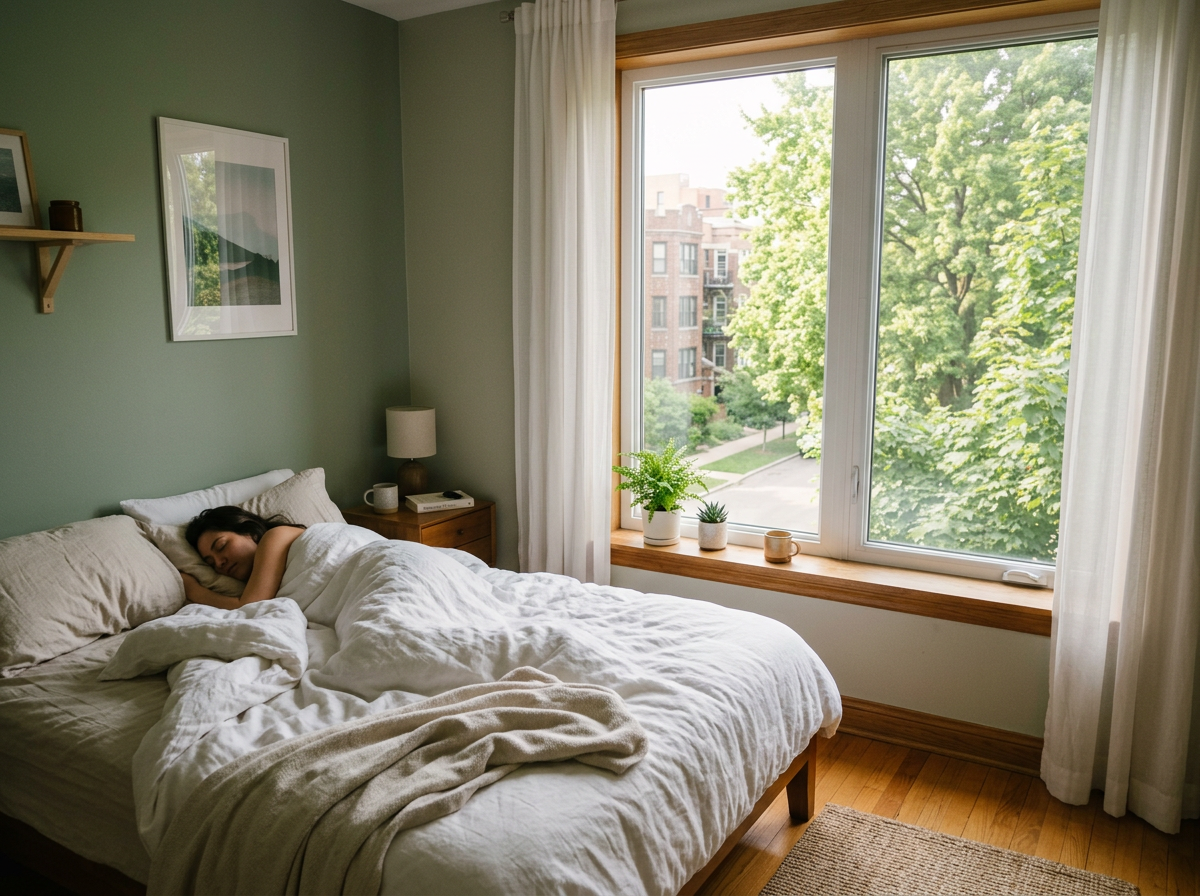
There is a subtle but decisive difference between inhabiting a place and simply occupying it in slow cities.
Occupying an apartment means sleeping there, leaving your things, paying the rent. Inhabiting it means something else entirely: knowing the light that enters in the morning, recognising which corner feels right, having a relationship with every object that surrounds you. It is not a question of square footage, or of income. It is a question of attention.
This attention — towards domestic space, towards the neighbourhood, towards the city — is at the heart of what has come to be called urban slow living. A phrase that risks sounding like a trend, but which in fact describes something far older: the desire to be in places, not merely to pass through them.
In slow cities, this attention — towards domestic space, towards the neighbourhood, towards the city — is at the heart of what has come to be called urban slow living.
Cittaslow: an Italian idea that travelled the world
In 1999, in Orvieto, a group of Italian mayors signed an unusual founding act: the creation of Cittaslow, a network of municipalities committed to improving quality of life by slowing down. The inspiration came from Carlo Petrini’s Slow Food movement — the same philosophy, applied not to food but to the entire urban fabric.
Today Cittaslow counts 308 member towns worldwide. Italy leads the network with 90 member municipalities. No town may join if it exceeds 50,000 inhabitants: human scale is a structural condition, not an aesthetic preference. The manifesto promotes liveable public spaces, local craftsmanship, territory-rooted food culture, reduced traffic, environmental care. But beyond the technical criteria, what the movement intuited with remarkable prescience is that the quality of life in a city is not measured in services delivered, but in experiences lived. And that the deepest experiences require time.
The neighbourhood as unit of measure
I spent years in South West London — Wimbledon, Barnes, Putney, Kingston — and one of the things I recall most clearly is not a monument, not a bar, not an event. It is the feeling of walking through a neighbourhood I knew well. Knowing that the bakery on the corner opened at seven. Recognising faces. Having a preferred route between the park and home.

That feeling — of light rootedness, without closure — is precisely what urban slow living seeks to recreate even in large cities. Not the quiet of a medieval village, but the possibility of building an intimacy with one’s daily space, even when that space is dense, chaotic, full of lives crossing. The neighbourhood, in this perspective, becomes the most honest unit of measure for urban life. Not the city as abstraction — the metropolis, the brand, the tourism — but the five hundred metres around home that one walks every day.
The carefully chosen object
Slow living enters the home through objects. Not in the sense of minimalism as aesthetic — the white room, the Scandinavian furniture, the decorative emptiness — but in the sense of a different relationship with what one possesses. An intentionally chosen object has a story. It knows where it was made, by whom, with what material. It need not be expensive: it could be a print bought from a small artisan printer, a cup found at a market, a book recovered from a secondhand bookshop. What changes is the degree of attention with which it was chosen — and, consequently, the relationship established with it over time.
Slowness is not renunciation
The most common misunderstanding about slow living is that it implies reduction: of consumption, of ambition, of movement. In fact the opposite is true. Those who choose to inhabit with intention do not renounce the city — they recover it. They do not avoid the urban experience — they deepen it.
London, perhaps the fastest city I have ever frequented, contains within itself entire ecosystems of slowness: the pubs where people talk for hours, the weekend markets that last all morning, the parks where people lie on the grass as though they have nowhere else to be. That slowness is not marginal to the city — it is one of the reasons the city functions, and why people stay.
Urban slow living is not a privilege of small towns, nor a nostalgia for something lost. It is a daily practice, available in any city, that asks only one thing: the willingness to stop, to look, and to choose carefully where to place one’s attention.
Which is, in the end, what one asks of a good reader, an attentive listener, anyone who truly wants to be in the world rather than simply pass through it.

Manuale Creativo per Fotografi Ribelli
40 idee per riscattare il tuo sguardo fotografico. Un libro di Massimo Usai per chi vuole guardare il mondo con occhi nuovi.
Acquista su Amazon In qualità di Affiliato Amazon ricevo un guadagno dagli acquisti idonei.Scopri di più da Urban Mood Magazine
Abbonati per ricevere gli ultimi articoli inviati alla tua e-mail.


