
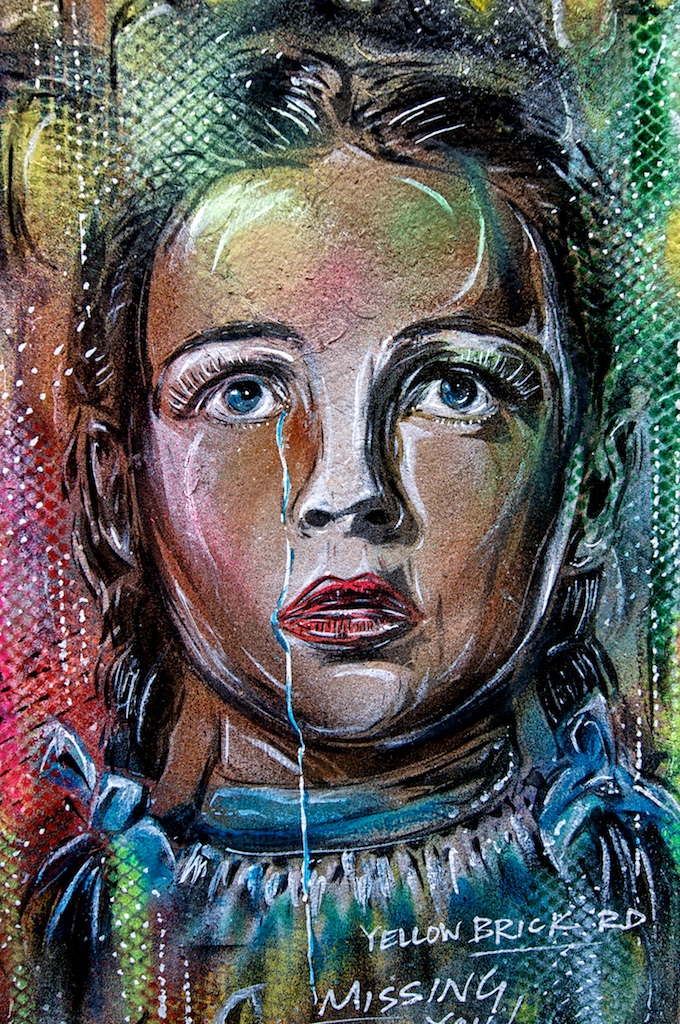
Six years have passed since a bronze figure went into Bristol harbour, and the question in the title of this piece has not aged at all: what do we want the UK to mean? In 2020 it sounded like a provocation. In 2026 it sounds like homework nobody has finished.
I wrote the first version of this post on the morning after the protest of 7 June 2020, while I was still angry. I have kept that anger where it was and added what has happened since, because a statue falling is an event, while deciding what a country celebrates is a much slower process.
Bristol, June 2020: the day a statue went into the water
I was happy when the statue of Edward Colston was pulled down during the Black Lives Matter protest in Bristol. Protesters tied ropes around it, dragged it through the streets and let it fall into the harbour, a few metres from the quays where the ships of the slave trade once docked.
Colston was a slave trader. The shame is not the toppling: the shame is that the monument stood there in the first place, for one hundred and twenty-five years, in the middle of a British city. It represented a celebration of the brutality, the cruelty and the arrogance of Empire.
Why the UK celebrated a slave trader for 125 years
Colston was a senior official of the Royal African Company, the London company that held the English monopoly on the transatlantic slave trade. In the years he was involved, it shipped tens of thousands of enslaved African men, women and children towards the Caribbean and the Americas, and thousands of them died during the crossing.
In Bristol he was remembered for something else: schools, almshouses, charities. The statue arrived in 1895, more than one hundred and seventy years after his death, when the city wanted a respectable founding father rather than an honest one. That distance between the philanthropy and the account books is exactly where the UK has always preferred to look away.
This terrible history of slavery should always be remembered in the school’s book and not celebrate keeping statues out of the time.
Robert Clive and the statues the UK still keeps
Robert Clive, who plundered Bengal in an orgy of imperial criminality excessive even by the standards of the eighteenth century, still stands outside the Foreign Office in London. I wanted that statue removed in 2020 and I want it removed now.
The official answer of the UK has been a formula: retain and explain. Keep the bronze, add a plaque, add a paragraph of context. In Oxford, the governing body of Oriel College voted that the Cecil Rhodes statue should go, then decided to keep it and explain it instead.
A plaque is cheaper than a decision. It also assumes that everybody stops to read.

What changed in the UK after the statue fell
The statue was fished out of the water four days later. Since 2021 it has been shown lying down, still covered in spray paint, at the M Shed museum in Bristol, next to the placards of the protest and the answers of a public consultation about what should happen to it.
Four people were tried for criminal damage and a jury acquitted them in January 2022. Colston Hall became Bristol Beacon. Colston’s Girls’ School became Montpelier High School. The plinth on Colston Avenue stayed empty, which is possibly the most honest monument the city has ever had.
A short timeline of the UK statue debate, 2020 to 2026
Read together, the dates explain the mood of the country better than any single monument.
- 7 June 2020 – the Colston statue is pulled down in Bristol and pushed into the harbour.
- 9 June 2020 – the statue of the merchant and slave owner Robert Milligan is removed from West India Quay in London.
- Summer 2020 – the Mayor of London sets up a commission on diversity in the public realm; dozens of councils start auditing their own streets and plaques.
- 15 July 2020 – a sculpture of the protester Jen Reid appears on the empty plinth in Bristol and the council takes it away the following morning.
- September 2020 – Colston Hall is renamed Bristol Beacon.
- January 2021 – the government announces the retain and explain approach and tighter rules for removing monuments.
- May 2021 – Oriel College decides not to move the Cecil Rhodes statue in Oxford.
- June 2021 – the Colston statue goes on public display, lying down, at the M Shed.
- January 2022 – a jury acquits the four people accused of criminal damage.
The Berlin Wall lesson: 3 ways to move a statue
What I asked for in 2020 is something Eastern Europe had already done. After the Berlin Wall came down, the statues of the communist era were taken off the squares, and in Budapest many of them were collected in a park where you buy a ticket to look at them. Nothing was destroyed. Everything was demoted.
- Remove and store, when a figure exists only to celebrate a crime.
- Remove and re-house, in a museum or a sculpture park where the label can be longer than one sentence.
- Keep the square but rewrite all of it: names, funding, teaching, not only the plaque.
History is not deleted when a statue moves indoors. It is finally taught. Slavery belongs in every school book in the UK; it does not belong on a pedestal in a shopping street.
What the UK argument is really about
Nobody in this debate is asking to forget. A statue is not a history book: it is a compliment, paid in bronze, in the middle of a square, with public money or private prestige behind it. Removing the compliment does not remove the record.
The real question is who gets to decide. For a century the decision belonged to a small group of donors and committees; in 2020 it was taken, illegally and in fifteen minutes, by a crowd. Neither of those is a good long term method, and that is why the UK still has an unfinished conversation about consultation, listing rules and local votes.
3 questions to ask in front of any statue
- Who paid for it, and how long after the person had died?
- What exactly am I being invited to admire?
- Who was never asked whether it should be there?
Why this is not only a UK problem
The summer of 2020 moved the same argument through half of Europe. In Antwerp a statue of Leopold II was taken away by the city after being burned and painted; in Milan the monument to the journalist Indro Montanelli was covered in red paint by activists who wanted his Eritrean child bride remembered next to his books; in the United States dozens of Confederate figures came off their pedestals in a matter of weeks.
Each country reacted with its own accent. Belgium sent the bronze to a museum, Italy argued on television and kept the statue, and the UK invented a formula. What all of them discovered is that a monument is a decision that has to be renewed by every generation, and that pretending otherwise is what turns a square into a battlefield.
Seen from outside, the UK has one advantage: the archives are enormous and the scholarship is excellent. The material to tell the whole story already exists. It is the labels, the classrooms and the funding that have to catch up.
So what do we want the UK to mean in 2026?
In 2026 the argument has moved from bronze to everything else: what the curriculum says, who runs and funds the museums, which names are written on hospitals, halls of residence and streets. That work is harder than pulling on a rope, and far less photogenic.
My answer has not changed since that morning in June. I want the UK to mean a country able to read its own accounts without flinching: remember everything, celebrate carefully, and leave a few plinths empty for the questions we have not answered yet.
Colston, Bristol and the UK: quick answers
Was the statue destroyed?
No. It was recovered from the harbour after four days and conserved exactly as the protest left it, with the paint and the damage visible, and it is now a museum object rather than a monument.
Is it legal to remove a statue in the UK?
Not on your own. Most monuments are listed or stand in conservation areas, so moving one needs consent from the local authority, and since 2021 central government has asked to be consulted as well. That is the slow route, and the slow route is the only legitimate one.
Does the empty plinth need a new statue?
Not necessarily. An empty pedestal with a good caption teaches more than a replacement chosen in a hurry, and it keeps the question open for the people who will walk past it in 2036.
Keep reading
If you like the idea of museums as the rooms where a country argues with itself, read our Friday at the Victoria and Albert Museum. For a lighter portrait of the same country, there is our selection of essential UK indie releases of 2026.

Massimo Usai
Associate of British Freelance Photography
09

Equinozio d’autunno: perché rallentare fa bene (e come le stagioni regolano il nostro corpo)
Rallentare in autunno non è pigrizia ma biologia: come luce, melatonina e ritmi circadiani cambiano il corpo con l’equinozio, e tre gesti per assecondarli.


A Marineo la moringa forifica il pane: cronaca di un borgo siciliano che ingegnerizza i pilastri della Dieta Mediterranea.
In un borgo del Palermitano l’“albero della vita” africano incontra i grani antichi di Sicilia. Al Moringa Food Festival di Marineo, tra pane, dolci e pizza, si scrive un piccolo capitolo di longevità mediterranea.


The Beauty of Warsaw’s Skylines in Winter
A bright, cold hour among the skylines of Warsaw — and what the winter sun does to a city rebuilt from nothing. City Study N°02, Warszawa.

Quando il silenzio incontra la musica: da Diodato a Il silenzio ai confini del mondo di Matt Bellino
Pochi giorni separano la vittoria di Diodato al Festival di Sanremo 2020 dall’inizio di una delle esperienze collettive più destabilizzanti vissute dall’Italia negli ultimi decenni. Fai rumore conquista il Festival il 9 febbraio e, quando il Paese entra nell’emergenza sanitaria, quella canzone nata prima della pandemia comincia ad accompagnare persone chiuse nelle proprie case, lontane…


Il pittore delle cucine: Renato Bacchetta e la Sardegna che sapeva di casa
Il ristorante Dal Pittore di Cagliari entra nella Guida Michelin. Ma la storia vera è quella dello chef Renato Bacchetta: dal latte consegnato a dieci anni all’approdo in Sardegna, «un paradiso» per un cuoco.

Le lagune non sono terre marginali: la lezione mediterranea di Roberto Pili
Dalla Sardegna alla Sicilia, le lagune del Mediterraneo raccontano il legame millenario tra biodiversità, alimentazione e comunità. Nell’articolo pubblicato su Longevitimes, Roberto Pili propone di considerarle autentiche culle della cultura mediterranea. Siamo abituati a osservare le lagune come paesaggi da proteggere, luoghi attraversati dai fenicotteri o aree naturali sopravvissute ai margini delle città. Nell’articolo Le lagune…

The Weather We Grow In
A cornfield holding its breath before the rain — and the quiet lesson in growing in whatever weather you’re given. Field Study N°01, Zea Mays.

Fuori… la luce di Rosita D’Esposito: quando la maternità attraversa il buio e cerca una strada per tornare a sé
Esce ufficialmente oggi, 15 settembre 2026, Fuori… la luce di Rosita D’Esposito, un libro che sceglie di entrare in uno degli spazi più delicati e meno raccontati della maternità, quello in cui la nascita di un figlio non coincide necessariamente con quella felicità assoluta che l’immaginario collettivo continua troppo spesso a considerare quasi obbligatoria. Intorno…

Cosa vedere a Bruges in un weekend: guida ai due giorni perfetti
Cosa vedere a Bruges in un weekend: canali, campanile, musei e piazze medievali. Itinerario di due giorni nella città più romantica del Belgio, con consigli pratici.


Manuale Creativo per Fotografi Ribelli
40 idee per riscattare il tuo sguardo fotografico. Un libro di Massimo Usai per chi vuole guardare il mondo con occhi nuovi.
Acquista su Amazon In qualità di Affiliato Amazon ricevo un guadagno dagli acquisti idonei.Scopri di più da
Abbonati per ricevere gli ultimi articoli inviati alla tua e-mail.


