
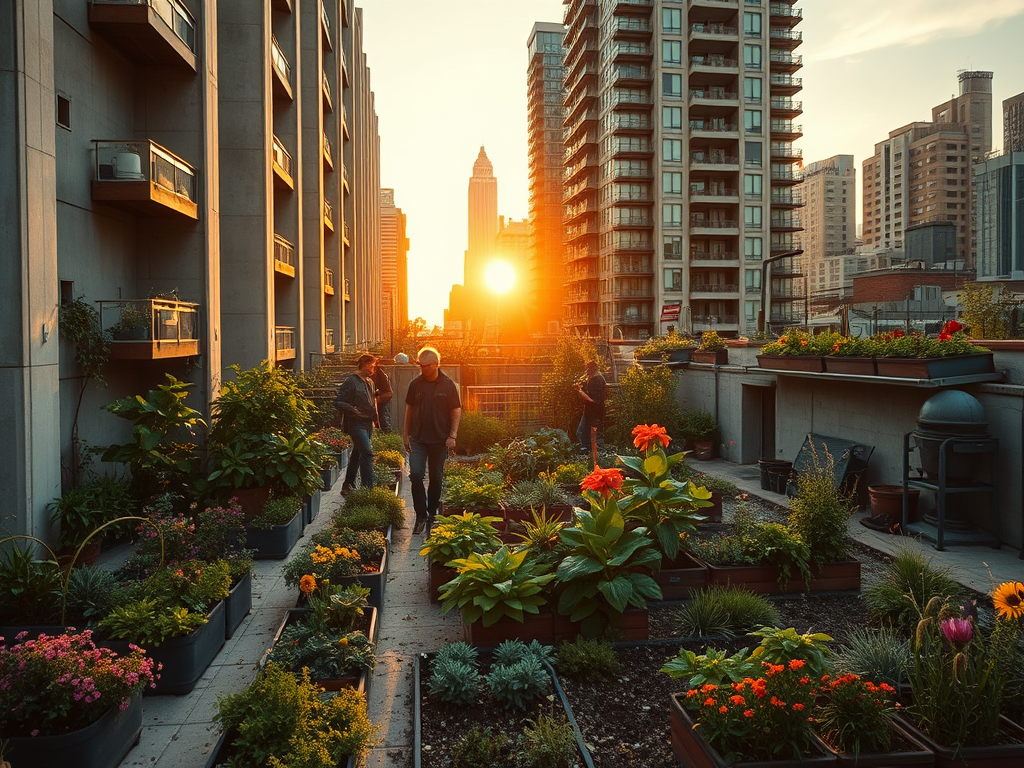
As cities continue to grow, the pressure on available land intensifies. This often results in large swathes of concrete and asphalt replacing green spaces. However, a quiet revolution is underway: urban gardening. This movement is not just about cultivating plants in city centers; it’s about reimagining the relationship between people and their environment.
- The Environmental Benefits of Urban Gardening
Urban gardening brings nature back into cities, helping to combat the urban heat island effect and improve air quality. By introducing greenery into densely populated areas, these gardens reduce temperatures, absorb carbon dioxide, and filter pollutants. They also promote biodiversity by creating habitats for birds, insects, and small animals that might otherwise be displaced. - Social and Mental Health Advantages
Green spaces have long been recognized for their positive impact on mental health. Urban gardening takes this a step further by fostering community connections. When people come together to plant and maintain gardens, they form bonds, share knowledge, and build a sense of belonging. For individuals, the act of gardening—tending to soil, watching plants grow—can be profoundly therapeutic, reducing stress and improving overall well-being. - Food Security and Sustainability
With growing concerns about food security, urban gardening offers a practical solution. Community gardens, rooftop farms, and vertical growing systems enable city dwellers to produce fresh fruits, vegetables, and herbs locally. This reduces the reliance on long supply chains, lowers the carbon footprint associated with transporting food, and ensures access to healthier, fresher produce. - Innovative Urban Gardening Methods
- Rooftop Gardens: Utilizing flat, unused roofs to grow plants and create communal spaces.
- Vertical Gardens: Installing green walls on building facades to save space and provide insulation.
- Community Gardens: Shared plots in neighborhoods where residents collaborate on planting and harvesting.
- Hydroponics and Aquaponics: Soil-less farming techniques that maximize yield in small urban spaces.
- Challenges and Solutions
Urban gardening isn’t without its obstacles. Space constraints, limited access to sunlight, and high initial costs can deter potential gardeners. However, innovations like portable planters, reflective surfaces to redirect sunlight, and public funding initiatives are making urban gardening more accessible. Moreover, local governments and nonprofit organizations are increasingly supporting these efforts by offering grants, educational programs, and dedicated garden spaces. - Inspiring Examples Around the World
Cities such as Singapore have turned their rooftops into lush green farms, setting an example of what’s possible in dense urban environments. In New York, community gardens flourish in vacant lots, transforming once-neglected spaces into thriving green oases. London’s urban farming initiatives have inspired a new generation of gardeners to grow their own food and participate in sustainable city living. - How to Get Started with Urban Gardening
If you’re inspired to start your own urban garden, begin with a small project. Even a windowsill herb garden can make a difference. Choose hardy, easy-to-grow plants like basil, mint, or lettuce. Invest in quality soil and pots, and pay attention to sunlight and watering needs. As you gain confidence, consider expanding your efforts—perhaps joining a local community garden or setting up a small vertical garden on your balcony.
In essence, urban gardening is about more than just plants. It’s a movement that transforms cities into greener, healthier, and more resilient places. By embracing urban gardening, city dwellers can play an active role in shaping a sustainable future.

Manuale Creativo per Fotografi Ribelli
40 idee per riscattare il tuo sguardo fotografico. Un libro di Massimo Usai per chi vuole guardare il mondo con occhi nuovi.
Acquista su Amazon In qualità di Affiliato Amazon ricevo un guadagno dagli acquisti idonei.Scopri di più da
Abbonati per ricevere gli ultimi articoli inviati alla tua e-mail.


