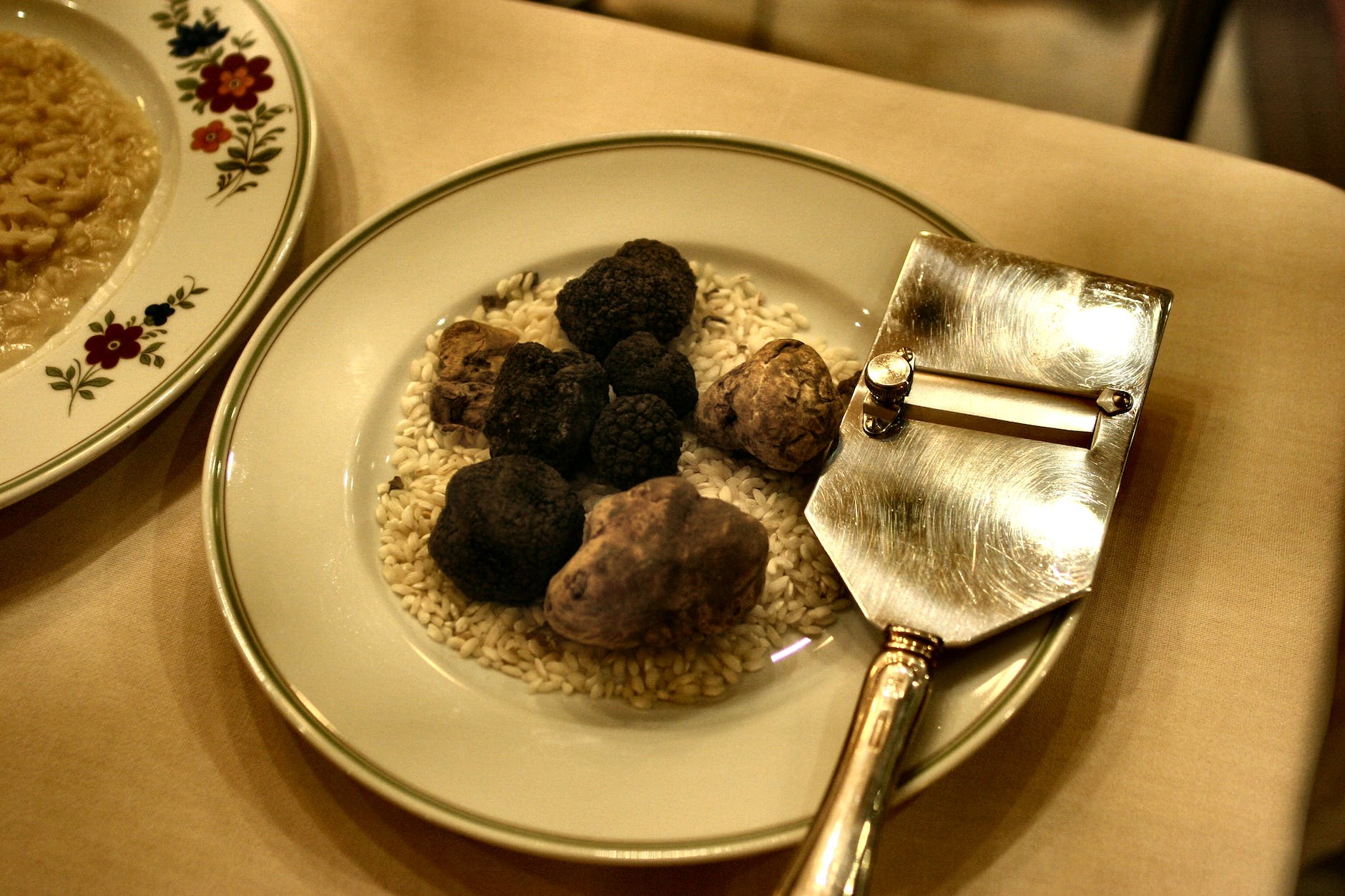
The truffle from Alba is one of the most sought-after and revered culinary delicacies in the world. This rare and elusive fungus grows in the Piedmont region of northern Italy, particularly in the hills surrounding the town of Alba.
Truffles are a type of mushroom that grows underground, typically in the root systems of certain trees like oak, hazel, and beech. They have a distinctive earthy and musky flavour and aroma that is prized by chefs and food enthusiasts around the world.
The truffle from Alba, also known as the white truffle or Tuber magnatum, is particularly prized for its unique and intense flavour. It is harvested between September and December each year and can sell for upwards of 6,000 pounds per Kilo, making it one of the most expensive foods in the world.

The history of truffles in the Piedmont region dates to ancient times, with references to the prized fungus appearing in Roman texts as early as the 1st century AD. However, it was not until the Middle Ages that truffles began to gain widespread popularity in the region.
During this time, truffles were regarded as luxury item and were often given as gifts to royalty and other nobility. In the 18th and 19th centuries, truffles began to gain even greater popularity, particularly among the wealthy and influential elite in the Piedmont region.
Today, the truffle from Alba is still highly prized, and the annual truffle festival in Alba attracts thousands of visitors from around the world. The festival, which takes place in October and November, celebrates the region’s rich culinary heritage and includes a range of truffle-related activities and events.
One of the reasons why the truffle from Alba is so highly prized is its unique flavour profile. Unlike other types of truffles, which can have a slightly bitter or pungent flavour, the white truffle from Alba is known for its delicate and complex taste.
The flavour of the truffle is largely dependent on the environment in which it grows. The truffle from Alba grows in a particular type of soil, with specific climatic conditions and a particular ecosystem of trees and vegetation. This unique environment gives the truffle its distinctive flavour and aroma.
Harvesting truffles are a delicate and time-consuming process. Truffles are found underground, and their location can only be detected by the trained noses of specially trained dogs or pigs. Once located, the truffle is carefully extracted from the soil, taking care not to damage the fragile fungus.
Due to their rarity and high demand, truffles from Alba are often sold at auction, with prices reaching astronomical levels. The highest price ever paid for a single truffle was in 2014, when a white truffle from Alba weighing 4.16 pounds sold for $61,250 at an auction in New York.

Despite their high price, truffles are a popular ingredient in gourmet cooking and are used in a range of dishes, from simple pasta dishes to complex, multi-course meals. Truffles can be shaved over a dish just before serving, adding a distinctive and intense flavour to any dish.
The truffle from Alba is also used in a range of other culinary products, including truffle oils, butter, and spreads. These products can be used to add truffle flavour to a range of dishes and are a more affordable alternative to purchasing fresh truffles.
While the truffle from Alba is undoubtedly one of the most prized culinary delicacies in the world, it is also a fragile and endangered species. The demand for truffles has led to over-harvesting and destruction of the ecosystem in which they grow, leading to a decline in the population of truffles in the region.
Efforts are underway to preserve the ecosystem in which the truffle from Alba grows and to promote sustainable harvesting practices. This includes initiatives to protect truffle habitats, such as the planting of trees that are beneficial to the growth of truffles and the implementation of regulations around the number of truffles that can be harvested each year.
In addition, many chefs and food enthusiasts are exploring alternative sources of truffles, including truffles grown in other regions or even truffle-flavoured products. While these alternatives may not have the same unique flavour and aroma as the truffle from Alba, they are a more sustainable option that helps reduce the demand for the precious fungus.

Despite the challenges facing the truffle from Alba, its popularity and mystique continue to attract food lovers from around the world. The annual truffle festival in Alba remains a highlight of the culinary calendar, with visitors coming from far and wide to taste the precious fungus and celebrate the region’s rich culinary heritage.
The truffle from Alba is a true culinary treasure, with a unique and complex flavour profile that has captivated food lovers for centuries. It is a rarity and its high price only adds to its allure, making it a true symbol of luxury and indulgence.
However, as with all delicacies, it is important to approach the truffle from Alba with a sense of responsibility and sustainability. By promoting sustainable harvesting practices and exploring alternative sources of truffles, we can ensure that this precious fungus remains part of the culinary world for generations to come.
IF YOU WANT TO BUY TRUFFLE AND ITS PRODUCTS I SUGGEST YOU VISIT LA BOTTEGA DEL MONDO. THEY DELIVER IN ALL OF EUROPE.

Manuale Creativo per Fotografi Ribelli
40 idee per riscattare il tuo sguardo fotografico. Un libro di Massimo Usai per chi vuole guardare il mondo con occhi nuovi.
Acquista su Amazon In qualità di Affiliato Amazon ricevo un guadagno dagli acquisti idonei.Scopri di più da Urban Mood Magazine
Abbonati per ricevere gli ultimi articoli inviati alla tua e-mail.


