Table of Contents
Exploring a new place is more than seeing sights. It’s about diving into the local culture. Eating local food is a big part of this. It lets travellers connect with the community and learn about its traditions.
Local food festivals and culinary events are like community projects. They bring people together and show off a region’s heritage. By tasting the food, you can really appreciate a place’s history and people.
This article will explore the connection between Food and Travel. It shows how the Food of the world opens doors to understanding different cultures.
The Intersection of Food and Travel
Traveling and trying new foods lets us dive into local life. It helps us connect deeply with the places we see. Food acts as a common language, bringing cultures together.
Why Food is Essential to Travel Experiences
Food is key to travel, giving us a taste of local culture and history. Eating local dishes is more than just eating. It’s learning about traditions and values.
Local ingredients and dishes show a place’s identity. For example, coastal areas use fresh seafood, while tropical places use certain spices.
| Destination | Local Specialty | Culinary Significance |
|---|---|---|
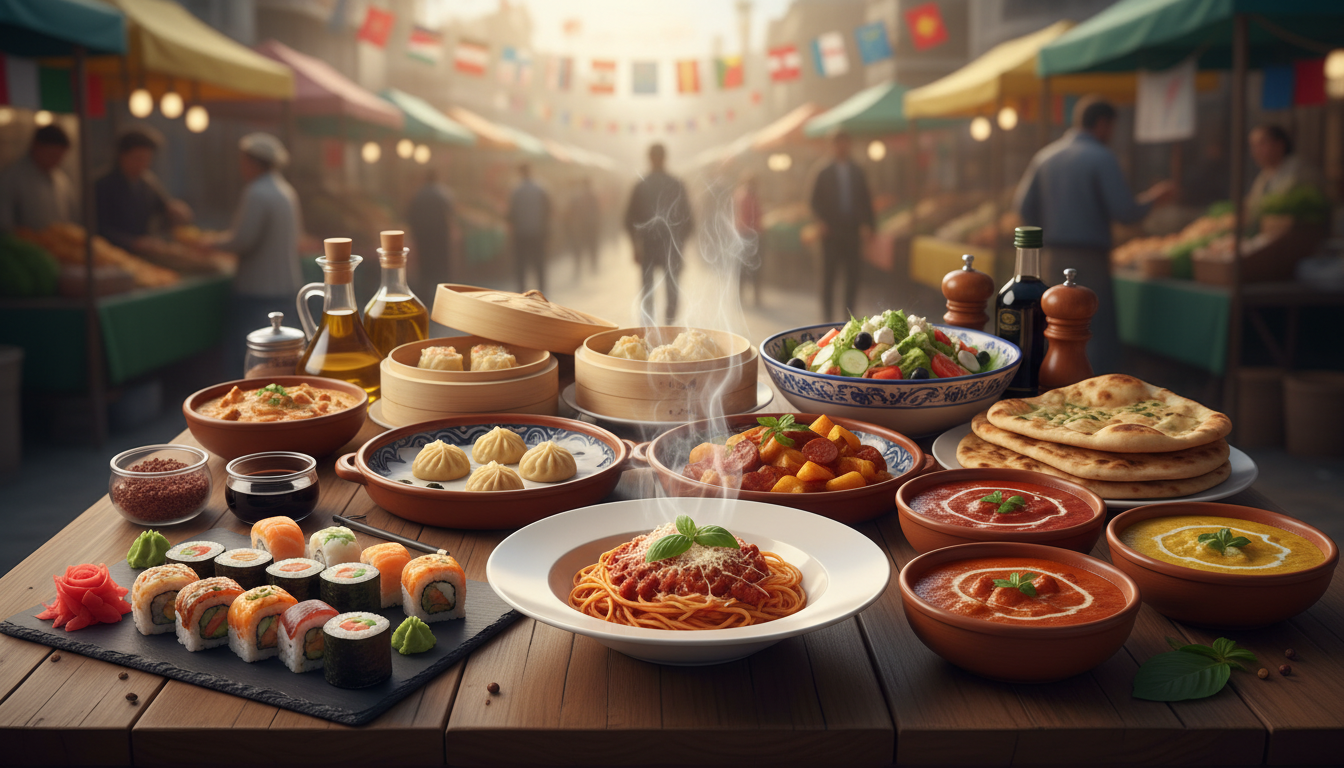
| Japan | Sushi | Reflects the country’s emphasis on freshness and seasonality |
| India | Curry | Showcases the diverse use of spices and herbs |
| Italy | Pasta | Highlights the importance of locally sourced ingredients like olive oil and tomatoes |
Cultural Significance of Cuisine
Cuisine mirrors a region’s culture, shaped by history, geography, and people. It brings communities together, with meals at the heart of social events.
Food traditions are kept alive through generations. Recipes and cooking methods are shared, preserving cultural identity.
Exploring Local Ingredients
Discovering local ingredients is vital to understanding a place’s food. It’s about finding unique produce, meats, and spices and seeing how they’re used.
By diving into local food systems, travelers appreciate a region’s cooking more. This might mean visiting markets, taking cooking classes, or eating at family-run places.
Popular Culinary Destinations
The world is full of amazing places to eat. Food lovers can explore unique tastes and traditions. Whether you’re experienced or new, there’s always something new to try.
Top Cities Globally Known for Food
Some cities are famous for their food. Paris, France is known for fancy dishes like escargot. Tokyo, Japan is a paradise for sushi fans, with fresh seafood.
Italy is full of great places to eat. Rome and Florence are famous for their real Italian food.

Hidden Gems for Food Lovers
There are many hidden spots for food lovers. Chiang Mai, Thailand is known for its street food, like khao soi. Marrakech, Morocco offers vibrant souks and delicious tagines.
Oaxaca City in Mexico is a must-visit for real Mexican food. It’s famous for mole and mezcal.
Unique Culinary Festivals Around the World
Culinary festivals let you dive into local culture and food. The Taste of Chicago festival shows off the city’s food scene. Oktoberfest in Munich, Germany, is known for its beer and traditional food.
The Pingxi Sky Lantern Festival in Taiwan is unique. It combines beautiful views with local food.
These places and events show the variety of global food. They offer something for everyone.
Authentic Dining Experiences
Authentic dining experiences are key in culinary travel. They give a taste of local culture and community. Travellers find unique ways to connect with the local food scene when they go beyond tourist spots.
Farm-to-Table Dining
Farm-to-table dining links travellers directly to their food’s source. Meals are made from fresh, local ingredients. This supports the local economy and offers real flavours.
This dining style is popular for genuine culinary experiences. Restaurants focus on local ingredients. Some even offer farm tours.
Street Food Adventures
Street food is vibrant and diverse worldwide. It’s affordable and authentic. Street food adventures let travellers taste local cuisine in its purest form.
From Southeast Asian night markets to European street vendors, street food is a culinary journey. It’s a chance to try local specialities and meet locals and other travellers.
Home-Cooked Meals with Locals
Sharing a meal with locals is more than eating. It’s about connecting with the community and understanding their traditions. It shows the warmth of local hospitality.
Homestay programs and cooking classes let travellers learn local dishes. This exchange builds cultural understanding and connection. It makes travel more meaningful.
| Dining Experience | Characteristics | Benefits |
|---|---|---|
| Farm-to-Table | Locally sourced ingredients, sustainable practices | Fresh flavours, supports local economy |
| Street Food | Variety of flavours, affordable, vibrant culture | Authentic taste, cultural immersion |
| Home-Cooked Meals | Shared with local families, traditional cooking methods | Cultural exchange, personal connections |
Food Tours and Culinary Classes
The world of food is vast and diverse. Joining food tours and culinary classes is a great way to explore it. It not only boosts your culinary knowledge but also lets you dive into local culture.
Benefits of Joining a Food Tour
Food tours are a delightful way to discover new flavors and learn about local dishes. They take you to hidden gems you might not find alone. You also get to meet local chefs and food lovers, making your trip richer.
Food tours can help you live longer by introducing you to healthy foods and cooking methods. By trying different cuisines, you can eat better and enjoy meals with others.

Best Culinary Classes to Take While Traveling
Culinary classes give you a hands-on experience. You learn local cooking techniques and ingredients. From Italy to France, there are many classes worldwide. They teach new recipes and show the cultural value of food.
When picking a class, look at its focus, the instructors’ skills, and local ingredient use. Many classes also let you visit markets or farms, deepening your food culture understanding.
How to Create Your Own Food Trail
To create your own food trail, research local eateries, markets, and schools. Ask locals for tips and explore food-rich areas. Use online resources and travel guides to find top dishes and places.
- Research local specialties and restaurants before your trip.
- Visit local markets and food festivals to experience a variety of cuisines.
- Take notes on your favorite dishes and cooking techniques to recreate them at home.
By following these steps, you can make a food journey that suits your tastes. This makes your travels even more special.
Food and Travel Trends
Food and travel are now closely linked, with a focus on being kind to the planet. People want to enjoy tasty food and help the environment and local communities at the same time.
Rise of Plant-Based Travel
More people are choosing to travel for plant-based food experiences. This is because they care about the planet and want to eat healthier.
Plant-based travel is more than just food. It’s about diving into local culture and learning about sustainable living. Many places now offer vegan cooking classes and support local, organic farming.
Global Influence of Food Influencers
Food influencers shape where we travel, thanks to their posts on social media. They share pictures of amazing dishes and places to eat, making travel for food more appealing.
These influencers do more than just suggest places. They also promote sustainable dining practices and encourage us to eat responsibly.
Sustainable Dining Practices While Traveling
Travelers are now looking for ways to eat sustainably. This means choosing food that’s locally made, reducing waste, and supporting local farmers.
By picking restaurants that follow these principles, travelers can help. They can also make choices that support the local economy and are better for the planet.
Preparing for Culinary Adventures
To dive into the ‘Food of the world,’ knowing the local cuisine and customs is key. As you get ready for your culinary journey, aim to enjoy new tastes and respect food culture.

Researching Local Foods and Customs
Researching local foods and customs before you go can make your dining experiences better. Knowing the main ingredients, cooking styles, and dining rules will help you feel more at ease. For example, learning about the meaning behind certain dishes can make talking to chefs and food sellers more interesting.
Anthony Bourdain once said, “Your body is not a temple, it’s an amusement park. Enjoy the ride.” This quote shows the joy of trying new things. Learning about local foods and customs is the first step to enjoying your journey.
Packing Essentials for Food Travelers
Choosing the right items to pack can greatly improve your food travel. You might need a water filter or purification tablets for safe drinking water. Also, reusable utensils for street food and a travel spice kit are useful. Don’t forget snacks from home to ease into the new culture and for comfort during long trips.
- A portable water filter or purification tablets
- Reusable utensils for street food
- A travel-sized spice kit
- Snacks from home
Tips for Navigating Dietary Restrictions Abroad
Dealing with dietary restrictions while traveling can be tough, but it’s doable with some planning. Knowing how to say “I am gluten-free” or “I don’t eat dairy” in the local language helps a lot. Also, finding restaurants that fit your diet before you arrive can save you time and stress.
“The discovery of a new dish does more for human happiness than the discovery of a new star.” –
By learning about local foods, packing smart, and planning for dietary needs, you can have a rewarding culinary adventure. This will add to your travel joy and longevity.
Capturing Food Memories
Capturing food memories is more than just taking pictures. It’s about keeping experiences that last a lifetime. When we travel, the food we try is a big part of our journey. Documenting these moments can be a fun way to remember them.
Best Ways to Document Your Culinary Journey
There are many ways to document your food journey. Photography is a great method. Taking high-quality photos of the dishes you try helps you remember the tastes and textures.
Keeping a food diary or journal is also helpful. You can write down the ingredients, how the dishes were made, and your thoughts on each one. This way, you can recall your experiences vividly.
Collecting recipes from places you visit is another good idea. You can talk to local chefs, cook with locals, or just jot down recipes you like. Then, you can make these dishes at home, reliving your food adventures.
Sharing Your Food Adventures on Social Media
Social media is a great way to share your food stories with others. Sites like Instagram and Facebook let you post about your culinary experiences. Using hashtags can help you connect with others who love food and travel.
When posting, tell the story behind each dish. Share its cultural significance or history. This makes your posts more interesting. Also, talking to your followers can build a community around your food adventures.
Creating a Travel Food Journal
A travel food journal is a personal way to document your food journey. It can include recipes, stories of places you visited, and the people you met. Writing about your thoughts and feelings about the food helps you remember your experiences.
To make your journal special, add sketches or doodles of the dishes. You can also include photos and memorabilia like ticket stubs or menus. This turns your journal into a keepsake that captures your culinary travels.
The Impact of Food on Cultural Understanding
Exploring the world’s cuisine is more than just tasting new flavors. It’s about diving into a culture’s heart. Food can bridge cultural gaps, bringing people from different backgrounds together.
Food as a Form of Communication
Food acts as a universal language, helping people connect through shared meals. Sharing a meal is not just about flavors; it’s about stories, traditions, and values. This way, people from different cultures can understand each other better.
Cooking and sharing meals are key to human connection. These experiences let us see the cultural importance of dishes and their roles in societies.
Exploring Historical Dishes and Their Stories
Historical dishes tell stories and legends deeply rooted in a culture’s history. By exploring these dishes, we learn about the historical contexts and cultural practices that shaped them. For example, certain ingredients or cooking techniques might have been influenced by trade, migrations, or historical events.
Learning the stories behind historical dishes enriches our culinary experiences. It also gives us a glimpse into the past, showing how cultures have changed over time.
Food’s Role in Building Connections
Food has a unique power to unite people, creating a sense of community and belonging. Whether it’s through a traditional tea ceremony, cooking with locals, or sharing a meal with friends, food is key in forming connections.
By engaging with local food cultures, travelers can form meaningful relationships. This fosters a deeper understanding and appreciation of the culture they’re exploring.
Sharing meals is a universal act that crosses cultural boundaries. It’s a powerful tool for building bridges between communities. Through food, we can experience the richness of cultural diversity, promoting mutual respect and understanding.
Culinary Souvenirs: Bringing Home Flavors
As you finish your food and travel adventure, taking home a taste of it is a great idea. Choosing the right souvenirs is an art. It lets you share the flavours with others, keeping the memories alive.
Popular Souvenirs
Think about local treats like artisanal cheeses, infused oils, or spice blends. These items show off the local food scene and make great gifts.
Recreating Dishes
Try making dishes you loved on your trip at home. Look for local recipes online or get a cookbook with regional dishes. This way, you can enjoy the flavours again and try new ingredients.
Cooking Classes
Joining a cooking class is a fantastic way to learn new recipes and techniques. Many schools offer classes for travellers. You’ll get to work with local ingredients and cooking methods. This skill lets you make authentic dishes, making your Food and Travel experience even better.
FAQ
Q: What is the significance of trying local cuisine while traveling?
A: Trying local food is key to understanding a place’s culture and history. It lets travelers dive into the local way of life. This way, they can truly appreciate the destination.
Q: How can I discover unique culinary destinations around the world?
A: You can find great places to eat by researching online and reading food blogs. Asking locals or fellow travelers for tips is also helpful. This way, you can discover cities and hidden spots known for their food, as well as special food events.
Q: What are some authentic dining experiences I can have while traveling?
A: Real dining experiences include eating at farms, trying street food, and having meals with local families. These activities offer a chance to connect with the culture and people.
Q: What are the benefits of joining a food tour or taking culinary classes while traveling?
A: Food tours and cooking classes can make your trip better. They teach you about local ingredients and cooking methods. You also get to meet chefs and food lovers.
Q: How can I create a personalised food trail while traveling?
A: To make your own food trail, look up local restaurants, cooking schools, and markets. Ask locals for their favourite places. This way, you can find food that you’ll love.
Q: What are some current trends in food and travel that I should be aware of?
A: Today, plant-based travel and social media’s effect on food choices are big. Sustainable dining is also important. These trends can shape your food adventures.
Q: How can I prepare for culinary adventures while traveling?
A: To get ready for food adventures, learn about local foods and customs. Bring essentials like a portable stove or snacks. Also, figure out how to manage your diet while abroad.
Q: How can I document and share my culinary experiences while traveling?
A: Share your food journey on social media, in travel journals, or blogs. Take photos or write about your food memories. This way, you can share your experiences with others.
Q: What is the role of food in cultural understanding and exchange?
A: Food is a universal language. It helps people understand and share cultures by bringing them together for meals and stories. This builds connections between people.
Q: How can I continue my culinary journey after returning home?
A: Keep your food journey alive by choosing culinary souvenirs or trying dishes at home. Take cooking classes to learn new recipes. This way, you can relive your travel memories and flavours.
Q: What are some tips for navigating dietary restrictions while traveling abroad?
A: To manage dietary needs abroad, research local foods and ingredients. Talk to restaurant staff about your diet. Also, bring snacks or essentials. This ensures a safe and enjoyable dining experience.

Manuale Creativo per Fotografi Ribelli
40 idee per riscattare il tuo sguardo fotografico. Un libro di Massimo Usai per chi vuole guardare il mondo con occhi nuovi.
Acquista su Amazon In qualità di Affiliato Amazon ricevo un guadagno dagli acquisti idonei.Scopri di più da Urban Mood Magazine
Abbonati per ricevere gli ultimi articoli inviati alla tua e-mail.


