
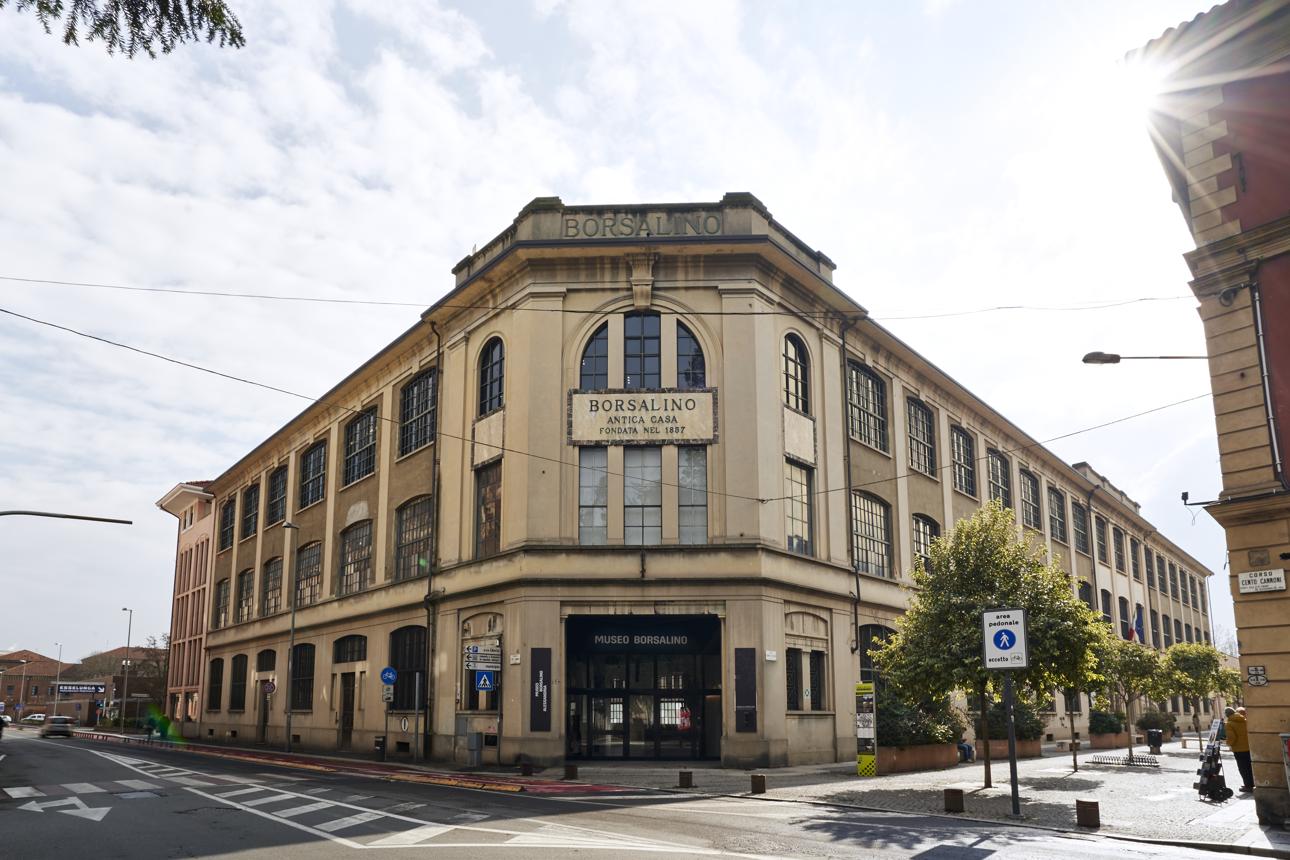
From announcement to experience: visiting the Borsalino Museum today
There is a subtle but important difference between a museum that opens and a museum that exists.
When I first wrote about the Borsalino Museum, it was still a promise—a cultural project tied to heritage, identity, and expectation. Today, that promise has become something tangible.
The museum is open. And more importantly, it works.
Visiting it now is not about imagining what it could become. It is about understanding what it already represents for the city of Alessandria.
A Museum That Has Found Its Rhythm
Located inside the historic Palazzo Borsalino, the museum is no longer just a symbolic space tied to the brand’s legacy. It is a fully operational cultural hub.
Inside, the experience unfolds across multiple narrative layers:
- the history of the Borsalino family and its foundation in 1857
- the craftsmanship behind one of Italy’s most iconic luxury products
- the global cultural influence of the brand
More than 2,000 hats are displayed across thematic sections, supported by multimedia installations and curated storytelling .
But what stands out today is not just the collection.
It is the coherence of the experience.

From Industrial Memory to Cultural Strategy
For decades, Borsalino represented industrial excellence. Today, it represents something more complex: a strategic cultural asset.
The museum reflects a broader transformation. It positions Alessandria not just as a city with history, but as a city capable of activating that history.
Walking through the rooms, there is a clear curatorial intention: this is not nostalgia. It is narrative control.
The past is not being preserved—it is being used.
The Mayor’s Vision, Updated
At the time of the inauguration in 2023, the Mayor of Alessandria, Giorgio Abonante, described the museum as a starting point for a broader cultural and economic strategy, aimed at strengthening the city’s identity and attractiveness .
Today, that vision feels more concrete.
In a recent exchange, the emphasis is no longer on opening, but on consolidation:
“The museum is part of a wider investment in culture and infrastructure that will define the future of Alessandria.”
This aligns with broader plans to strengthen cultural assets across the city in the coming years .
The shift is subtle, but decisive.
We are no longer talking about potential. We are talking about positioning.

What Changes When You Visit It Today
There is always a gap between institutional narrative and lived experience.
In this case, the gap is minimal.
What you encounter is:
- a museum that is accessible and clearly structured
- a narrative that speaks both to specialists and general visitors
- a space that feels designed for continuity, not just celebration
The Borsalino Museum is now part of the active cultural ecosystem of the city, hosting events and initiatives that extend beyond static exhibition .
That is the real difference compared to when it first opened.
A Personal Observation
What struck me most during the visit was not the scale of the collection, but its clarity.
There is no confusion about what this place wants to be.
In an era where many cultural institutions struggle to define their role, the Borsalino Museum has a very precise identity:
It connects craftsmanship, design, and cultural memory into a single narrative.
And it does so without excess.
Conclusion: Not an Opening, but a Presence
The Borsalino Museum is no longer news because it opened.
It matters because it has established itself.
What was once an industrial legacy is now a cultural engine.
What was once local is now globally readable.
And for a city like Alessandria, that shift is not just symbolic.
It is strategic.

Manuale Creativo per Fotografi Ribelli
40 idee per riscattare il tuo sguardo fotografico. Un libro di Massimo Usai per chi vuole guardare il mondo con occhi nuovi.
Acquista su Amazon In qualità di Affiliato Amazon ricevo un guadagno dagli acquisti idonei.Scopri di più da
Abbonati per ricevere gli ultimi articoli inviati alla tua e-mail.


